— PROFESSIONAL A/C TROUBLESHOOTING REFERENCE —
100 Air Conditioning Troubleshooting Cards
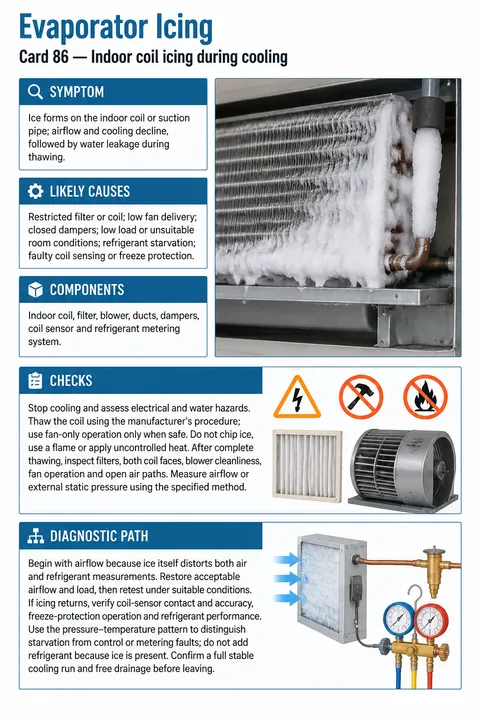
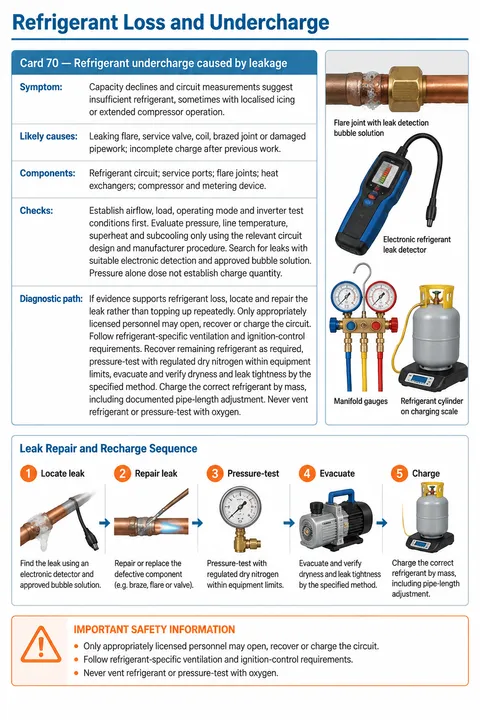
Symptoms • Possible Causes • Components • Checks • Diagnostic Paths
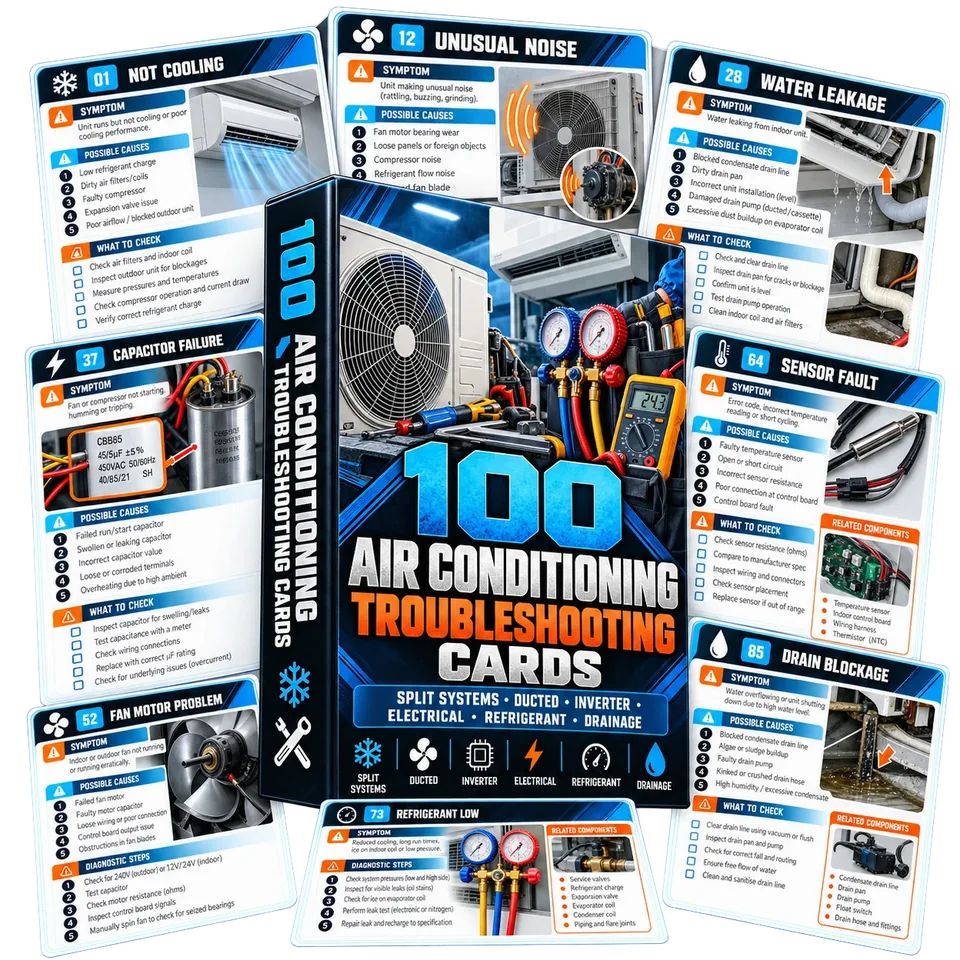
Start with the symptom. Know what to check next.
Access 100 practical troubleshooting cards covering common faults across split, ducted, inverter, electrical, sensor, fan, compressor, drainage and control systems.
Each card gives you a structured path from the symptom to the next logical checks.
Digital access after purchase • Use on phone, tablet or computer
See What’s Inside the Troubleshooting Library
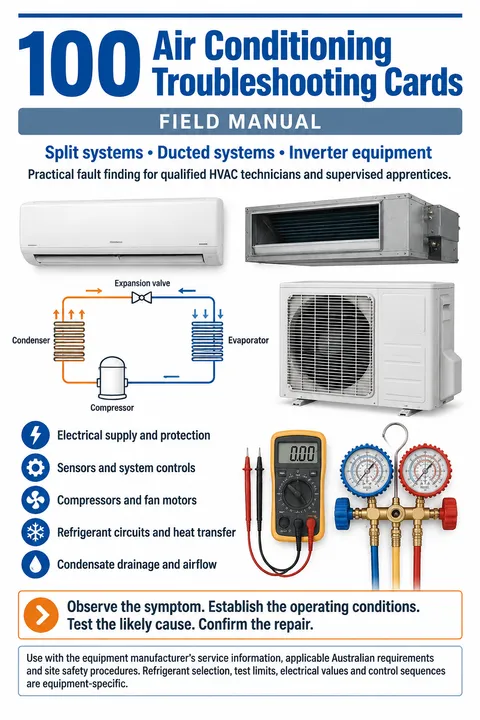
100 cards • Symptom-based • Field-focused • Built for troubleshooting
SPLIT SYSTEMS
Troubleshooting references for common operating, cooling, airflow and control symptoms in split systems.
DUCTED SYSTEMS
Cards covering airflow, operation, controls and common ducted-system service symptoms.
INVERTER & CONTROLS
References for inverter behaviour, communication, electronic controls and related symptoms.
ELECTRICAL
Diagnostic references for power supply, wiring, protection and electrical fault conditions.
SENSORS
Cards focused on thermistors, temperature sensing, abnormal readings and related control behaviour.
FANS & AIRFLOW
References for indoor and outdoor fans, airflow restrictions and fan-related faults.
COMPRESSOR & REFRIGERANT
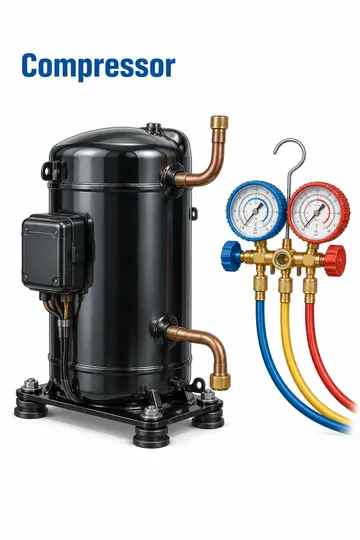
Cards for symptoms involving compressor operation and refrigerant-side investigation.
DRAINAGE
Troubleshooting references for condensate, blocked drains, water leaks and drainage components.
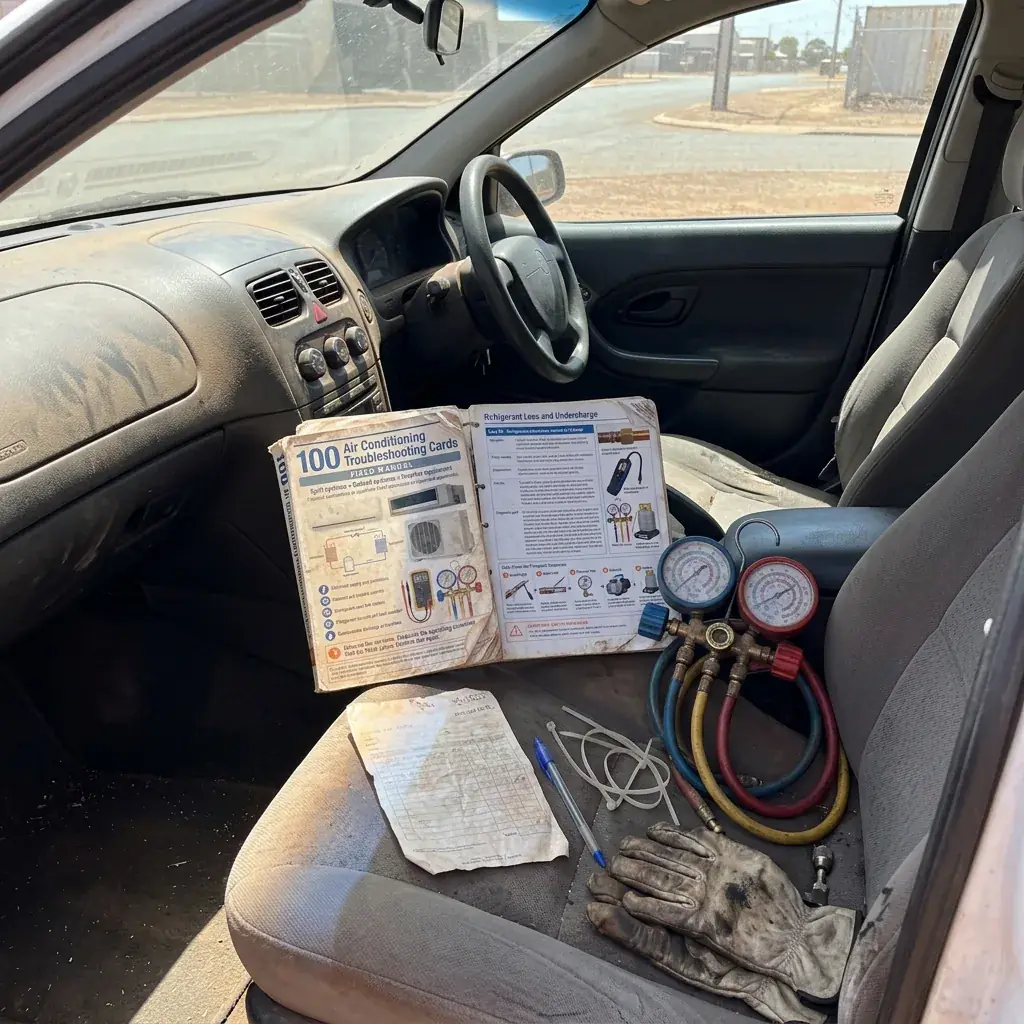
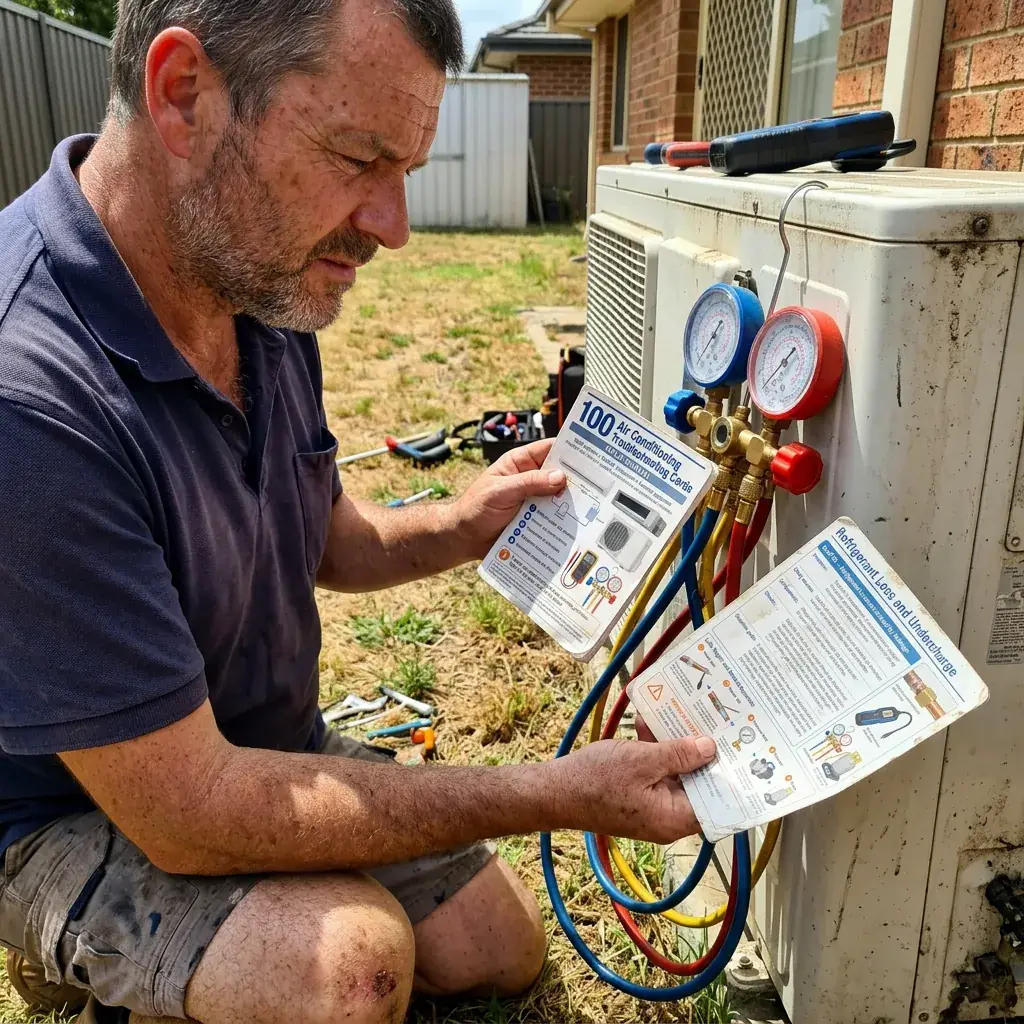
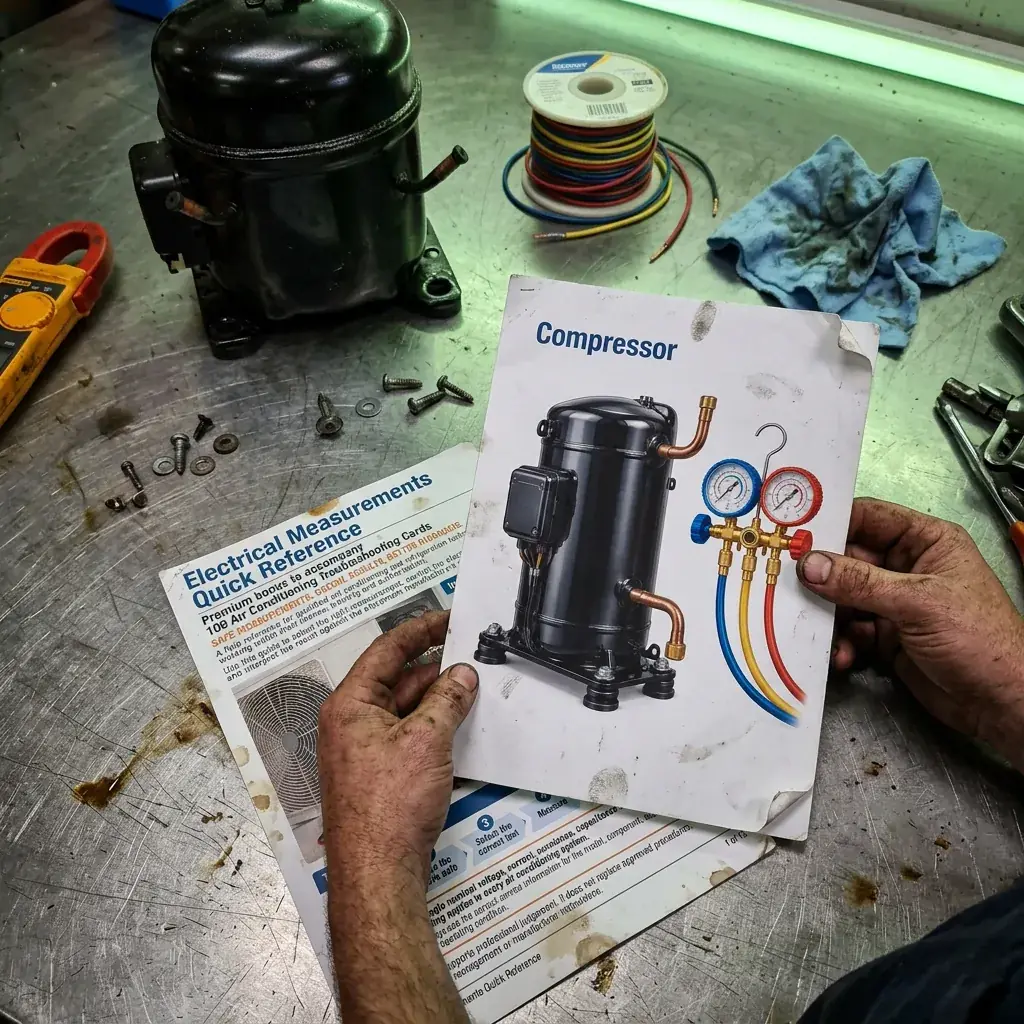
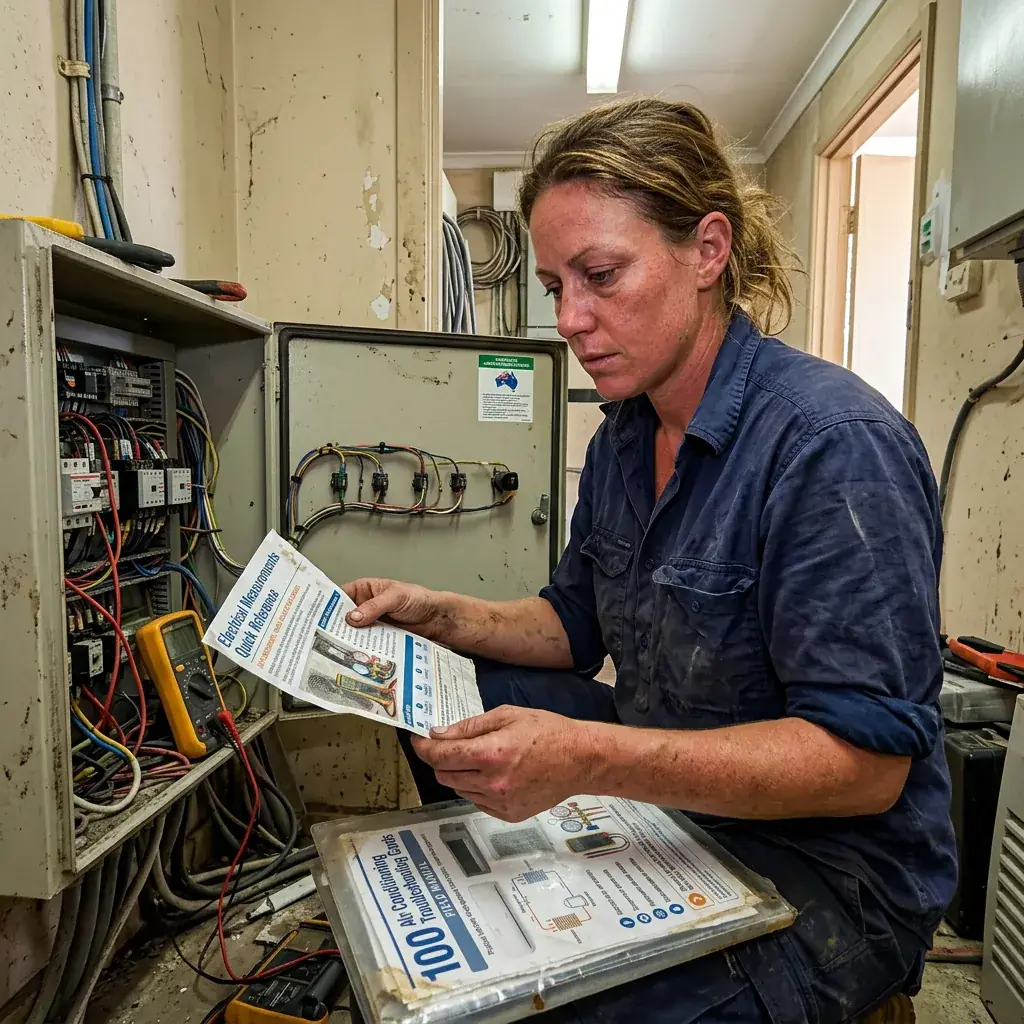
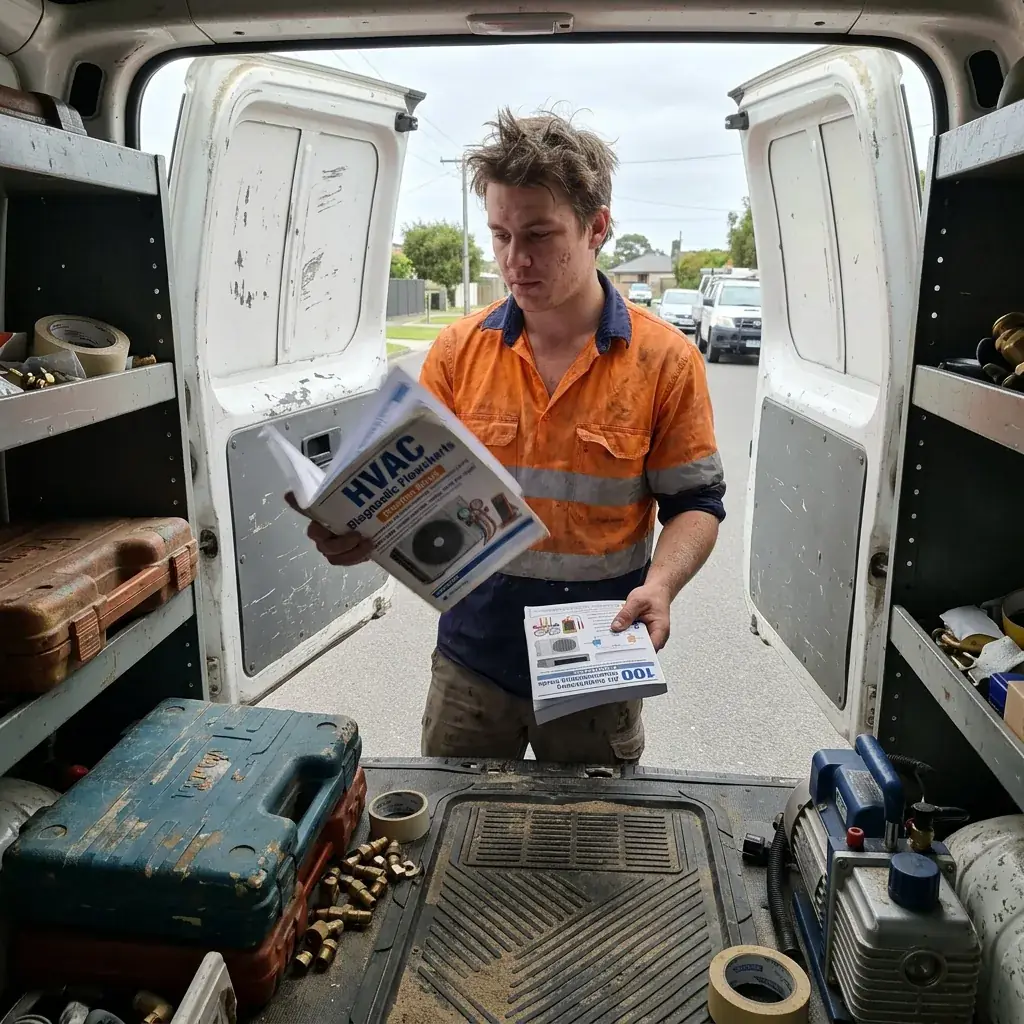
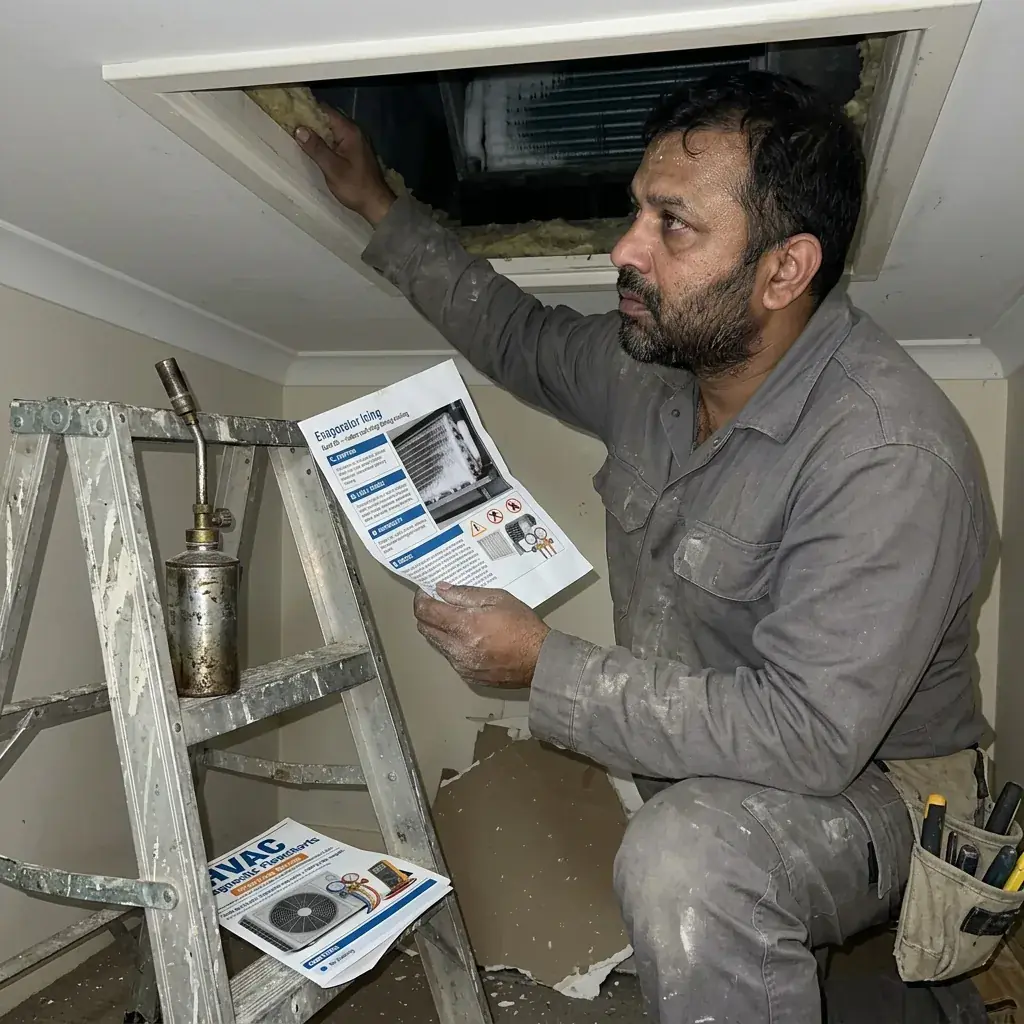
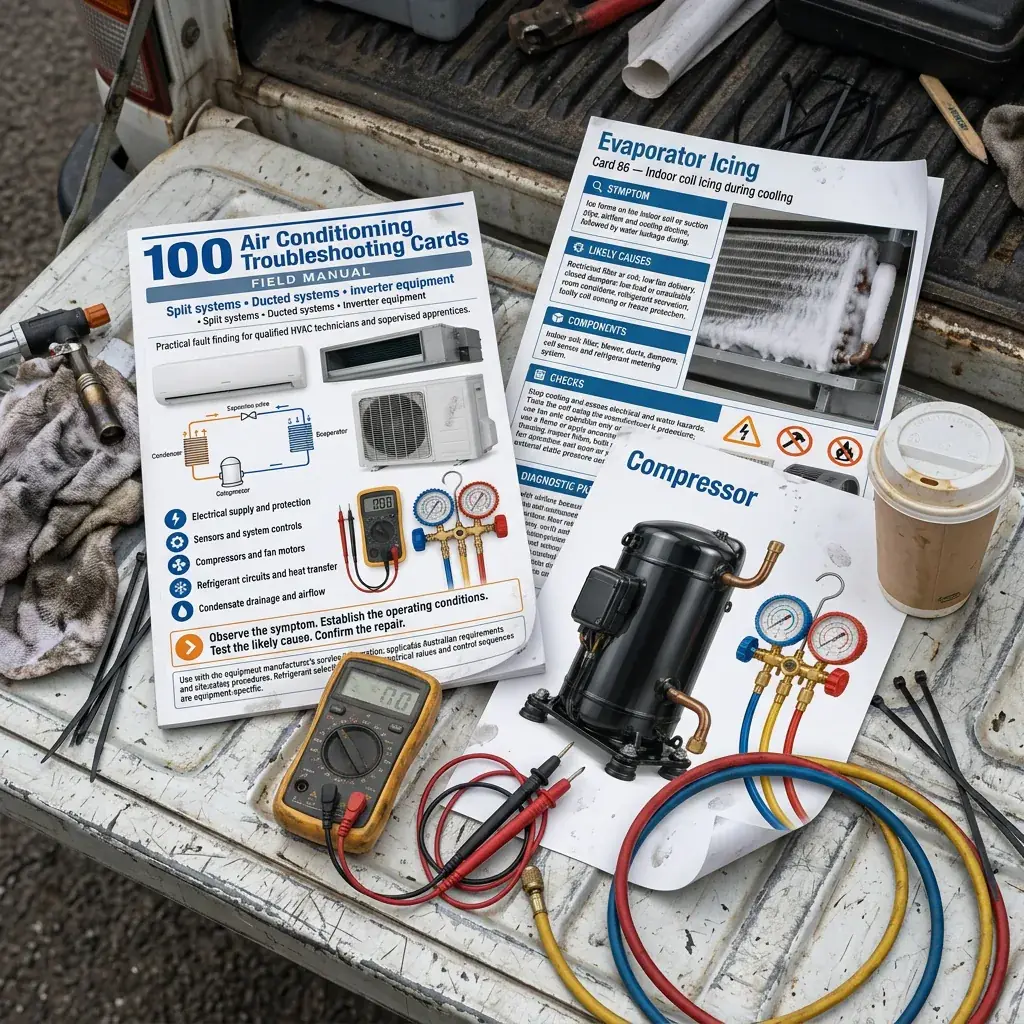
Start With What You’re Seeing in the Field
The Unit Isn’t Cooling
Open the relevant symptom card and work through airflow, operation, electrical, control and system-related checks.
The Outdoor Unit Won’t Run
Use the card to organise the likely electrical, control and component checks.
Airflow Is Poor
Review common restrictions, fan-related issues and components involved in the symptom.
The System Is Intermittent
Use a structured path to narrow down electrical, sensing, communication and control possibilities.
There’s a Water Leak
Work through drain, tray, pump and condensate-related checks.
I Need a Quick Diagnostic Reference
Go directly to the symptom instead of reading through an entire technical manual.
Fault finding gets harder when every possibility is checked in a random order.
Start with the symptom and follow a clearer diagnostic sequence.
Instead of jumping between unrelated possibilities, open the relevant card, review the likely causes, identify the components involved and work through the checks in a logical order.
GET ACCESS TO THE TROUBLESHOOTING LIBRARY →KEEP THE CARDS WITH YOU ON SERVICE CALLS
Open the troubleshooting library on your phone or tablet in the field, or print the cards you use most often.
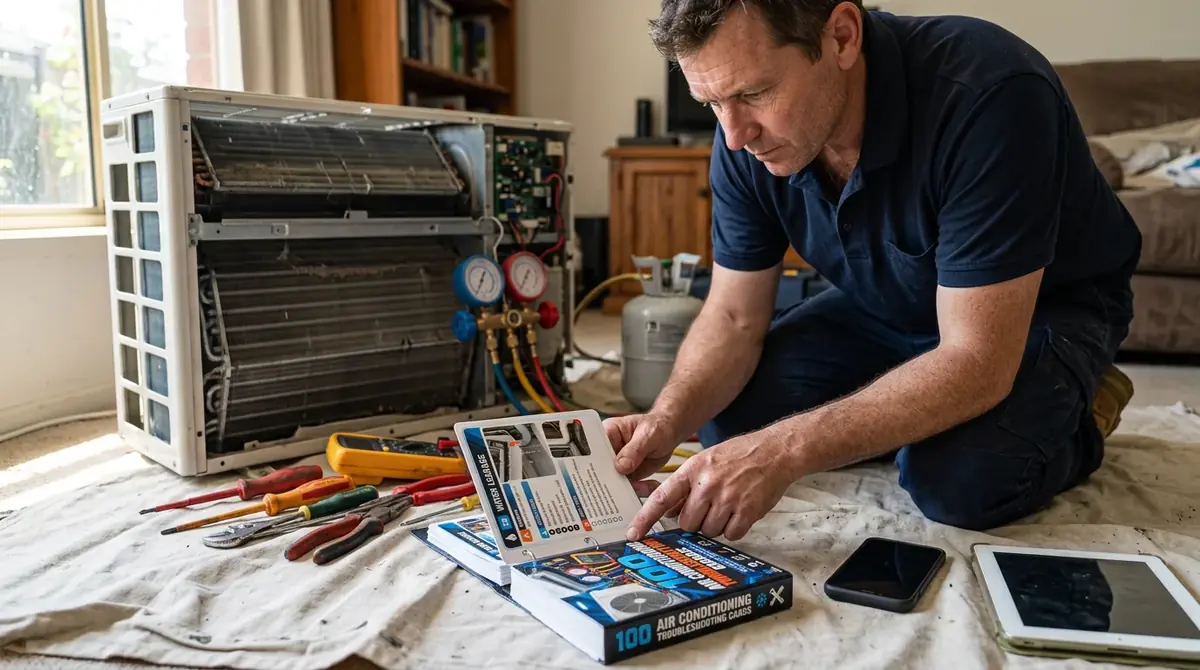
This Library Is Built for Technicians Who Want To:
START FROM THE SYMPTOM
Go directly to the fault condition you are seeing in the field.
FOLLOW A CLEARER PATH
Work through possible causes and checks in a more organised sequence.
KEEP REFERENCES HANDY
Access practical diagnostic cards without reading through a long manual.
COVER MORE COMMON FAULT AREAS
Keep references for electrical, sensors, fans, compressors, drainage, controls and other common service areas in one place.
Everything You’ll Get
- 100 Air Conditioning Troubleshooting Cards
- 75 pages
- Split systems
- Ducted systems
- Inverter systems
- Electrical faults
- Sensors & thermistors
- Fan motors
- Airflow issues
- Compressor-related symptoms
- Refrigerant-related symptoms
- Drainage & condensate
- Controls & communication
- Symptoms
- Possible causes
- Components to check
- Checks
- Diagnostic paths
- Digital access
100 Cards
75 Pages
Symptom-Based
Diagnostic Paths
Field Reference
Digital Access
And That’s Not All…
With the Complete Package, you’ll also get 4 practical field resources for diagnostic flow, electrical measurements, service reporting and preventive maintenance.
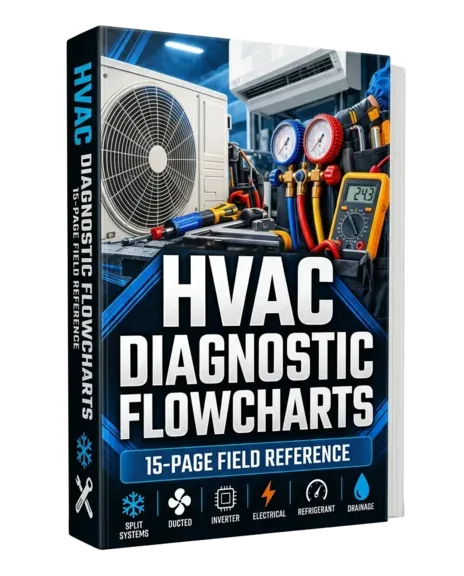
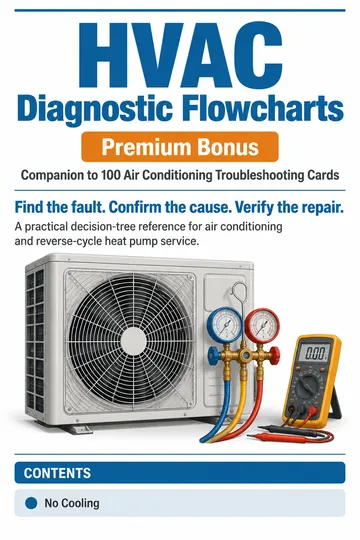
HVAC Diagnostic Flowcharts
A visual collection of troubleshooting flowcharts designed to help organise common diagnostic sequences from symptom to next check. Includes structures for no cooling, start-up, airflow, fan, drainage, control and intermittent faults.
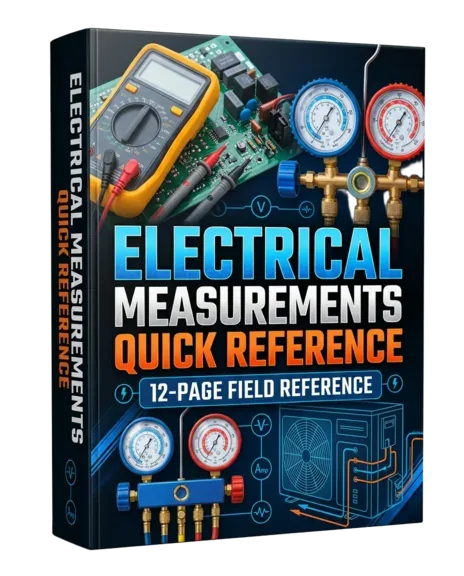
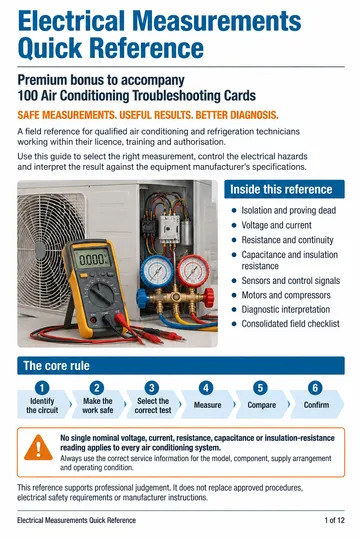
Electrical Measurements Quick Reference
A compact reference for common electrical measurements and field checks, including voltage, resistance, continuity, current, meter setup, notes and precautions. Always use manufacturer specifications where required.
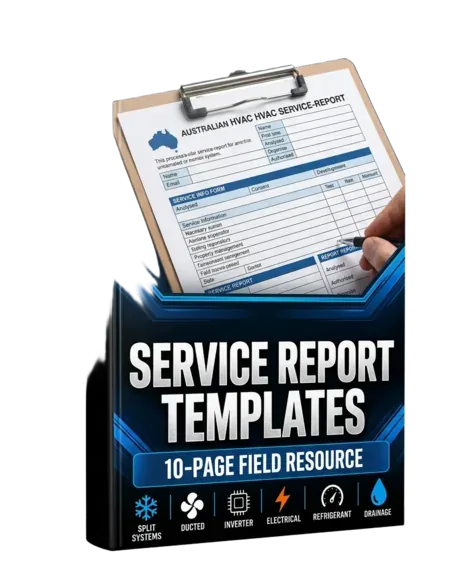
Service Report Templates
Practical templates for recording site and equipment details, reported symptoms, inspections, measurements, findings, completed work, recommendations and technician notes.
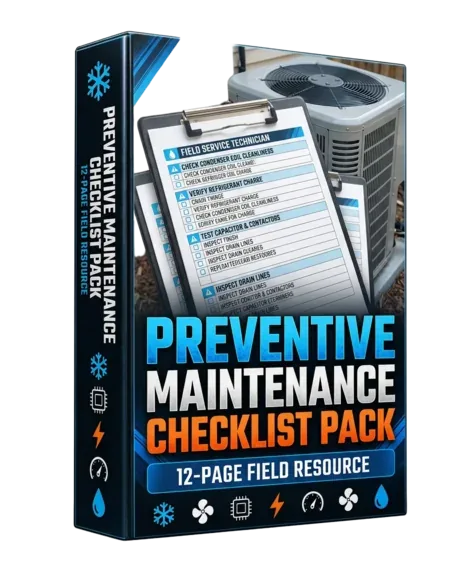
Preventive Maintenance Checklist Pack
Printable checklists for visual inspection, filters, coils, airflow, drainage, electrical condition, controls, operating observations and service notes. Manufacturer procedures still apply.
IDENTIFY → DIAGNOSE → FOLLOW → MEASURE → DOCUMENT → MAINTAIN
CHOOSE YOUR PACKAGE
Professional field references for structured fault finding
BASIC PACKAGE
100 Air Conditioning Troubleshooting Cards
Get the complete troubleshooting library with 100 symptom-based field reference cards.
- 100 troubleshooting cards
- 75 pages
- Symptoms
- Possible causes
- Components
- Checks
- Diagnostic paths
- Digital access
- One-time payment
AUD $10
COMPLETE PACKAGE
100 Troubleshooting Cards + 4 Field Bonuses
Get the main diagnostic library plus 4 additional field resources for flowcharts, measurements, reporting and maintenance.
- 100 Air Conditioning Troubleshooting Cards
- 75-page main reference
- HVAC Diagnostic Flowcharts
- Electrical Measurements Quick Reference
- Service Report Templates
- Preventive Maintenance Checklist Pack
- Approx. 124 pages total
- 5 digital resources
- One-time payment
AUD $27
Complete supports the full field workflow: identify the symptom, diagnose with the cards, follow the flowcharts, measure, document and maintain.
Field Reference Reviews

“I do residential split-system work and the cards are handy when you've got a fault that could be coming from a few different places. I mainly use them as a quick checklist before digging deeper.”
Callum Rees
Brisbane, QLD
“The layout is probably the best part. Symptom, possible causes and checks are all on the same card, so I don't have to scroll through pages of theory.”
Nathan Wilkes
Newcastle, NSW

“I've been in the trade a few years and still found a few diagnostic sequences worth keeping on my phone. Good reference for apprentices as well.”
Aaron McKenzie
Perth, WA
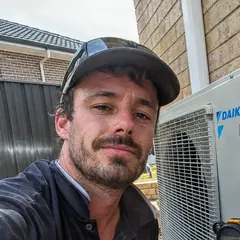
“The drainage and sensor-fault sections have been the ones I've opened the most. It's not replacing a manual, but it is useful as a field reference.”
Dylan Harper
Townsville, QLD
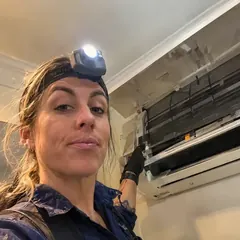
“I use it when helping with maintenance calls. The quick-reference format makes it much easier to work through a symptom systematically instead of jumping around.”
Brooke Jensen
Adelaide, SA
“I do residential split-system work and the cards are handy when you've got a fault that could be coming from a few different places. I mainly use them as a quick checklist before digging deeper.”
Callum Rees
Brisbane, QLD
“The layout is probably the best part. Symptom, possible causes and checks are all on the same card, so I don't have to scroll through pages of theory.”
Nathan Wilkes
Newcastle, NSW
“I've been in the trade a few years and still found a few diagnostic sequences worth keeping on my phone. Good reference for apprentices as well.”
Aaron McKenzie
Perth, WA
“The drainage and sensor-fault sections have been the ones I've opened the most. It's not replacing a manual, but it is useful as a field reference.”
Dylan Harper
Townsville, QLD
“I use it when helping with maintenance calls. The quick-reference format makes it much easier to work through a symptom systematically instead of jumping around.”
Brooke Jensen
Adelaide, SA

YOU HAVE A 7-DAY GUARANTEE
After purchase, you can access the content, review how the troubleshooting cards are organised and decide whether the material is right for you.
If, within the first 7 days, you believe the product does not meet your expectations, you may request a refund under the guarantee conditions.
One-time payment • No ongoing subscription • 7 days to assess your purchase
Review the library and its diagnostic structure before deciding with confidence.
Here’s How Your Access Works
Choose Your Package
Select Basic or Complete.
Complete Your Purchase
Checkout through the secure payment platform.
Get Your Resources
- Basic: 100 Air Conditioning Troubleshooting Cards
- Complete: Troubleshooting library + 4 field bonuses
Start With the Symptom
- Identify the symptom
- Open the relevant card
- Review possible causes
- Perform the appropriate checks
- Follow the diagnostic path
SYMPTOM → CAUSES → COMPONENTS → CHECKS → DIAGNOSTIC PATH
Frequently Asked Questions
1. How will I receive the 100 troubleshooting cards?
After your purchase is confirmed, you’ll receive digital access to the resources included in your selected package.
2. Who is this library designed for?
It is primarily designed for air conditioning, refrigeration and service technicians who want a practical troubleshooting reference for field use.
3. Is this a complete air conditioning training course?
No. It is a symptom-based troubleshooting reference intended to complement technical training, manufacturer information and field experience.
4. What types of systems are covered?
The library includes troubleshooting references involving split systems, ducted systems, inverter systems, electrical faults, sensors, fan motors, compressors, drainage and controls.
5. How is each card organised?
Each card follows a practical structure based on symptom, possible causes, components involved, checks and a diagnostic path.
6. Does the guide include brand-specific fault codes?
The core offer is organised around symptoms and diagnostic logic. Brand-specific fault-code coverage is only included where explicitly provided in the actual product.
7. Can I use the cards on my phone during service calls?
Yes. The library is designed for digital reference and can also be printed where useful.
8. Does this replace manufacturer service information?
No. Always refer to manufacturer specifications, procedures, wiring diagrams and technical documentation for the exact equipment being serviced.
9. What is the difference between Basic and Complete?
Basic includes the 100 troubleshooting cards. Complete also includes diagnostic flowcharts, the electrical measurements reference, service report templates and preventive maintenance checklists.
10. Is electrical and refrigerant work covered as DIY instruction?
No. The material is intended as a professional field reference. Electrical, refrigerant and regulated work must be performed within the technician’s qualifications, licensing requirements, applicable regulations and manufacturer procedures. Always isolate electrical supplies where required, use appropriate test equipment and PPE, and follow applicable Australian safety requirements.